Wednesday, 8 June 2011

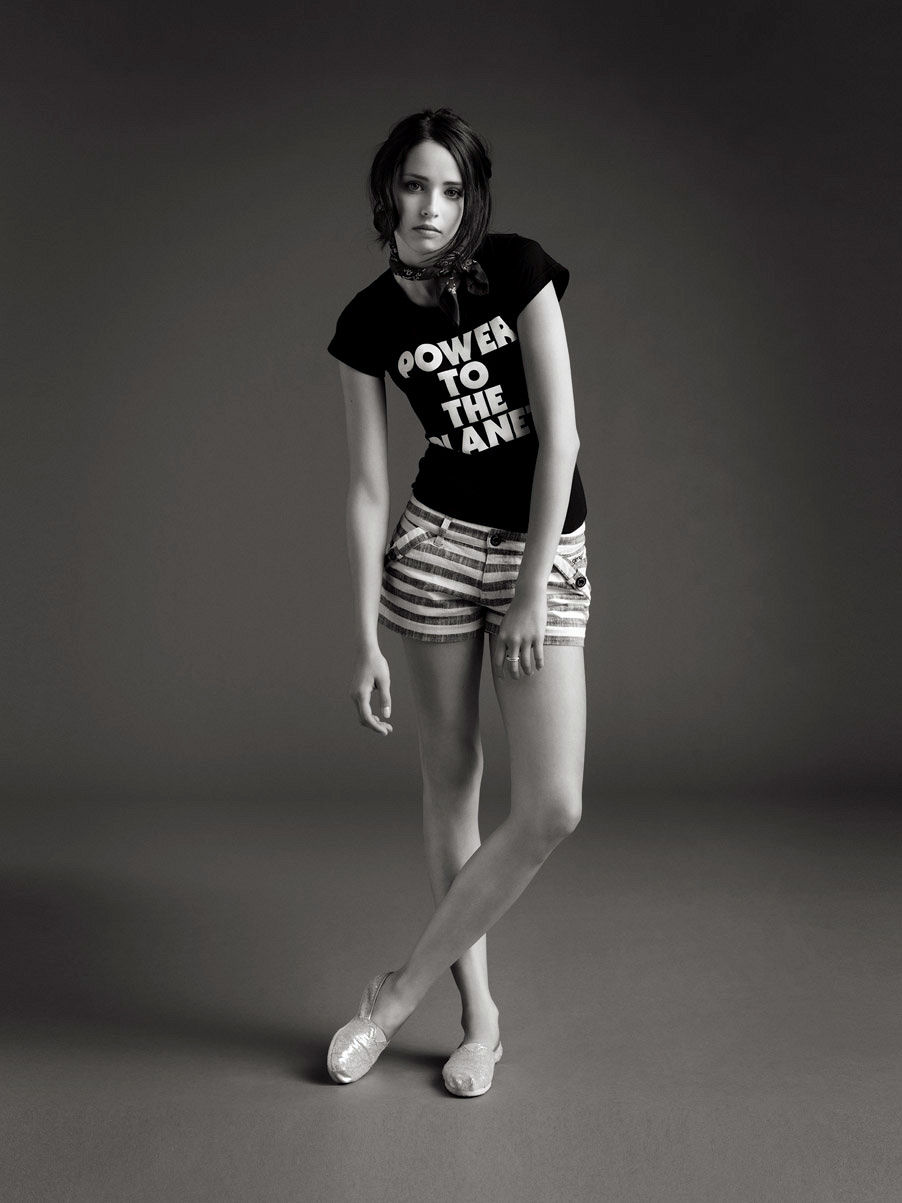
week 13 - social issue, deforestation

Deforestation - areas that used to be forested are converted for other uses such as logging or agricultural ground. 

Leading reasons for deforestation:
 *Expanding of agricultural land
 *Dams and other development projects
 *Fires
 *Logging
 *Mining
 *Economic reasons
 *Inadequate management
 *Weak institutions
 *Reluctance to engage in purposeful industry policy

Whats affected:
 *Recycling of carbon, oxygen and nitrogen
 *Act as a filter
 *Affects the environmental balance
 *Whipping out homes and habitats of many animals
 *Lack of vegetation
 *Soil erosion

We need to balance corporate and human needs against the environmental needs of these forests. If we continue at the rate we are going at the moment all the worlds rain forests could be destroyed in the next 100 years. 12 million hectares are being cleared annually or 20 football fields every minute.

week 12 - Commodity fetishism


Use value and exchange value commodity self.
“Consumerism creates an abstract world of signs and symbols separate from the economic context of commerce & production.”
How?
Mass produced are emptied of the meaning of their production (the context in which they were produced and the labour that created them) and then filled with new meanings in ways that both mystify the product and turn it into a fetish object. 

Commodity culture and commodity fetishism

A consumer culture is a commodity culture that is were commodities are central to cultural meaning. Commodities are things that can be bought or sold in a social system of exchange. The idea of commodity culture goes with the idea that we create our identities, even in the slightest way through consumer products which can be called the "commodity self". Everything from your clothing to the car you drive create your identity. Advertising encourage people to think of such commodities as central to conveying your personality. They will sell the idea that if you buy a certain brand or product you will therefore become a certain kind of person. 

week 8 - Advertising, consumers Culture & Desire


Envy Desire & Belonging

The language of transformation they sell the promise that their lives will change if they buy a product. They use figures of glamour that consumers can envy and wish to emulate.
Attachment of the value of art to a product can give it a connotation of prestige, tradition or authenticity &culture value.
Example. Grey goose vodka advertising ads such as these construct consumers as having cultural knowledge – cultural capital. French sociologist Pierre Bourdieu identified different forms of capital in addition to economic capital, social capital, symbolic capital &cultural capital.
Social capital = whom you know, your social network, +the opportunities they provide you.
Symbolic capital = prestige celebrities.
Cultural capital = the forms of cultural knowledge that give you social advantages. It can come in the form of rare taste, connoisseur & competence in deciphering cultural relation & artefacts.

Commodity Culture
Commodity Fetishism – Commodities are emptied of the meaning of their production (the context in which they were produced)
-Marx – social theorist 19th century, the first to write about capitalism as a social structural element sometimes “use value” is outweighed by ‘exchange value’ (the more expensive the better)

Gruen transfer
Selling 4 Wheel drives
Selling them as cars,
Giving the consumer the idea that if they buy this car they will go off road and that if they buy this car they will get to go to these gorgeous place and have these great adventures.

Cause related marketing, Suzuki saying they will donate money to save black rhinos when it is only really $100 per car, trying to distance itself from it’s competitors.

Using voices to communicate masculinity.
Toyota oh what a feeling still usd as symbol of driver satisfaction, they still sneak it in.

Decode the ad
-Who is the ‘commodity self’ of the 4wd
-Consider connotations of voice over.

The commodity self for these 4wd ads are mothers/wife’s, the 4wd is sold as a car, they try to make them look more like cars and in ads try to portray them in a way in which they look more like a car.
They also try to sell the 4wd’s as a masculinity symbol, using a masculine and manly voice over and showing the car doing outrages things and very masculine and manly.

week 7 - Frank Gehry


What is the meaning inherent in the public buildings of Frank Gehry and why are they celebrated today but would probably never get started in the 50’s?

“I think the blurring of the lines between art and architecture has got to happen.” Frank Gehry 1995

vanity fair.com/culture/features/2010/08/architecture-survey-201008

*Guggenheim museum considered greatest building of the past 30 years.  It reached new heights, there was nothing like it. One of the top tourist destinations in Europe.
* “The first photo’s of the near complete structure, which resembles a gargantuan bouquet of withering silver fish, rendered a seismic shift in the global art culture.”
* Gehry didn’t learn his skills as an architecture in high class schools which meant he was an ‘outsider’ from the beginning. He considered himself different from the architects who would call him an artist.
*inspired by Chartres Cathedral and Robert Rauschenberg.
* Gehry presented a solution to Modernism architecture on the late 20th Century. His work comes from a reaction to post modernism, a desperate need not to go there.

Abc.net.au/tv/bigideas/stories/2011/02/08/3131899.htm

*creates bold, innovative and controversial buildings that stand out.
*Best known projects Guggenheim Museum, Walt Disney concert hall, Dancing house.
*1989 awarded Pritzker Architecture Prize.
*Architectural firm, Gehry Partners employs over 120 people.

Pastexhibitions.guggenheim.org/gehry/biography.html

*”…he has developed a unique vocabulary that reflects both the urban vernacular and his long association with contemporary artists.”
*His earliest work came from a modernist idiom suggesting the varied influences of Harwell Hamilton Harris, Richard Neutra and Frank Lloyd Wright.


*1950’s design and architecture was focused on simpler, more organic and more comfortable approach to architecture and interiors.


*1950’s architecture was criticised for it’s sterility, and it’s disregard for regional building traditions.


*1950’s mass culture began to dominate and this created a blandness in culture as television network executives in particular wanted to cater to the largest audience possible so they shaped their programs to offend the least amount of viewers possible.      

INTERVIEW
*when younger his grandmother would let him play with blocks she had gotten for her stove, they were jigsaw off cuts so all different sizes and weird shapes.
*tried chemical engineering but didn’t like it and wasn’t good at it.
* thinking about what he wanted to do he thought of what he liked and that was art, going to museums, music.
* out of a hunch he tried an architecture class.
* didn’t do great at first, flunked first class of perspective and was angry about that, then went back next semester to try again and got an a.
*also taking class in ceramics and art design
*his art teacher was getting his house designed by Raphael Soriano if Gehry wanted to meet him, gehry loved the drama and theatre of his work, he knew what he was doing, the starkness of his work.
*then took a night class in architectural design which he excelled in and was skipped to second year.
* he got excited at first about the social issues, comes from liberal family, loved the panacea,  could make houses for the poor, cities, city planning.
*always said he didn’t want to make houses for rich people.
*began to find excitement in the forms and spaces and being able to conceive something then see it built and work with the craftsman, a mind game to get them motivated, like directing a movie, gets more exciting now that he has more freedom.
*up until late 70’s when he built his own house,  he thought as an architect as a service/ business, hadn’t ad much freedom before then to do what he wanted and explore and play after having this freedom realized he couldn’t go back.
*house design was strange, chain link fence. He was trying to relate to the middle lass suburb that he was living in and when he dealt with it the neighbors thought he was making fun of them.
*range of creativity possible we should push it and explore it, takes an learned intuition, from looking around you understanding what is going on in the culture,  understand what is going on and use it to create ideas and as inspiration.
*creativity is like poking a stick in a deep well, you poke around and every now and then you find something.
*he trys to make buildings that will inspire people, move people, get a reaction from people, not just to get a reaction but to get a positive reaction, is in the hope he will stay friends with the people who he makes these buildings for.
*he said that every artist coms across issues that are constraints these are then turned into positives by the artist they use them to make there project. He had to make a project with no constraints and found it very hard, couldn’t find relevance. Turn constraints into action.
* tried getting the energy of the first idea and drawing to the finished building.
*have to find ways that express how we live now, we move on from the past, moving forward while learning from the past.


Sketches of frank gehry
*changed the look of a field that was very conservative
*free willingness of art intertwined
*architect/artist takes risks like artists do
*director
*he has his own way of doing things
*tried to find a way of finding a way to express personal in a commercial field.
*likes making things with his hands.
*60’s aligned with artist didn’t hang with architects, his colleague’s would think he was silly  for what he was doing but the art crowd didn’t and he liked what they did.
*artists didn’t stick to traditions, they were free, and pushed the limits.
*he first realized his style of architecture when he was creating his own house and it was innovative and daring and free with windows coming out and rooms all different sizes. Meanwhile he was designing Santa Monica place which was a shopping mall which was structured and clean the total opposite to his house.
*likes sketching and it’s freedom and hates computer creating.
*his colleagues think of architecture as x and a very straight forward way nothing out of the box as something with restrictions and rules.
*”everything’s been done before in one way or another the only thing that changes is technology.”
*annoyed by the rules his profession has as to how things are to be done, what can be done and what can’t. there is something threatening to letting go.
*injects feeling into objects. Expresses feeling into objects.
*finds inspiration everywhere, from a painting to a waste basket.
*grew up as a modernist where decoration was a sin, so he used materials to create character.
*channels light, paints his buildings with light.
*builds the buildings into the location doesn’t built in a location. 


WEEK 6 - Images with Messages

Photography of a time, a historical document only recognised as such in the fullness of time.

Culture *counter culture
              *subculture
              *high culture                     [visual manifestations and representations]
              *popular culture

Annie Leibovits managed to make statements through her photography this was after she she found the image of the guards rolling up the carpet sumarising Nixon resigning de to his corruptness. so her photograph tells a story and sums up the event and what was going on.

Woopie Goldbirg Connotation - emerging from white culture, all white
                            denotation-
annie worked on intuition and grabs the moment.

Donald Trump making a statement of their lifestyle, all about money, in both images wife and trump are always separated.

she innovated Rolling stone magazine by photographing on a white background which increased sales dramatically.


Steve Martin, artist emerged in painting.


Florence Thompson

Thompson was the subject of a photo taken by Dorothea Lange titled Migrant Mother (1983). It is an iconic image of the great depression. This is a form of documentary photography. It is amazing how one photo can sum up an entire era. The photo uses symbolism, Thompson's face shows the worry and struggle of life during the depression. She has to find a way to support her children who in the photo we can see leaning on her. This can be taken as a visual metaphor of them needing her to support them and take car of them.

Wednesday, 6 April 2011

WEEK 5 - Annie Leibovitz Exhibition

The exhibition at the MCA is a collection of her work over her career from 1990 - 2005, the exhibition shows her life as a photographer. There are 192 works by American photographer Annie Leibovitz, reflecting not just her commercial work but her personal photographs. The works shown include portraits of public figures such as politicians, actors, artists, musicians and even the Queen. There are also some abstract landscape photographs and unpublished personal photographs capturing moments through her life with her family such as the birth of her children.
Leibovitz has produced some of the most famous and memorable photographs of well know figures such as Demi Moore, Al Pacino, Nicole Kidman. These photographs manage to capture the persons character and she is able to capture the individual as a whole not just their image. 
The reportage work Leibovitz has done is very compelling and eye opening in some cases. The exhibition showcases some of this work such as the powerful photographs taken in Sarajevo in the early 1990's. Also images from Hillary Clinton's election to the US Senate. 
The personal photographs from Leibovitz in the exhibition show very close memories and emotional moments through her life such as the birth of her children, vacations, close friends. There are some very emotional photographs of her ageing father as well as photographs of her partner Suzan as she fought cancer. 
Some of the photographs exhibited are from her work with magazines such as Rolling Stone, Vanity Fair and Vogue, she became the chief photographer for Rolling Stone in 1973. Leibovitz has also created influential advertising campaigns for American Express, Gap and the TV series The Sopranos. 
 Leibovitz work is very inspirational as tells a story or shows a character in an intriguing way. For her nothing is off limits she lives as a photographer in that she takes photographs of her entire life, capturing her life in film. Her reportage work is also breathtaking, the image of the blood marks on the wall from the South African massacre was heart wrenching yet illustrated the devastation very well. The Annie Leibovitz exhibition is a great summary of her life work and shows her diverseness and her great talent. 

Anni Leibovitz Documentary 
"Interesting to keep recording to see what a life is..." (Annie Leibovitz). She is very passionate and enthusiastic about her work. "She puts a stamp on the picture" Editor-in-chief Vogue. If you were in rock and roll Leibovitz was the person to go to. Acknowledged as the best in her field. 
"Saw the world through a ready made frame, the car window", lived in the car for a period when younger. Mother was very keen to take photo's of family and they were very special. 
Robert Frank and Henri Cartio-Barzon were her inspiration, made photography portable and fluid, how she learnt to take pictures. when she started working with Rolling Stone she said it was a totally different experience because she had to work with others, art director and writer. She was so highly thought of after her great work with John Lenon and Yoko Omo that they gave her the space to do what she wanted and take her own direction. 
"A lot can happen between the main moments", she captured some great political photography because she was able to capture the real story and the rawness of the person or situation. "To get the best photos you had to be involved in what was going on..." she got fully involved in the subject she was photographing. She always made herself one of the gang and emerged herself in what was going on. 
Went on tour with Rolling Stones to be their photographer. She conveyed what happened behind the stage, captured moments no other photographers had ever done. 
Barbra Morgan was a dance photographer that Leibovitz found inspiration from. She liked photographing dance because her mother was a dancer. Dancers she photographed said they would forget she was there, she would put herself in their world. She did realise that you can't photograph dance, you could only capture a moment. 
Richard Aveon another photographer that she found inspiration from. 
Through her career she started to realise that she could incorporate part of their life and their poetry. She made portraits that told the persons story and their personalities. She did it with lots of style and simplicity. She would work with the subject and not direct them and push her ideas on them. 
She became involved in drugs because of the environment she was working in, Rolling Stone magazine. She thought it made her work practice better when it was really the demise of her work. She was able to find help and go into rehab and never went back.  
Editor and Chief of vanity fair said she was very demanding. The photo's she was taking for Vanity Fair were different because she had to take beautiful photographs. 
Leibovitz work provoked people, her picture of Demi Moore pregnant and nude. 
Editor and Chief of Vogue said she produced such great photographs because she cared. Everyone knew this and everyone wanted to be photographed by her. As she became more famous she was able to get whatever she wanted to create her photos like planes, rain, marching bands. 
Susan became Annie's partner and because Susan was very academic and intellectual that this rubbed off on Leibovitz work. She got Leibovitz to go to Sarajevo and photograph the devastation over there in this war situation. 


Thursday, 31 March 2011

WEEK 4 - Visual Language

Sight = trust, power through flirting, eye contact, visual reassurance. We loose power when we can not see as we don't have the power to look at something or make someone look at us and we are unable to look away.
We also judge people on how they look, for example politicians employ people to make them look trustworthy and powerful. So the way they dress and physically conduct themselves communicates to us visually.


The camera has long been used to create visual compositions to portray meaning, they can be used to show heightened and fleeting moments.  A photographer who did this was 'WeeGee' Arthur Fellig.


Weegee got his name because he was always the first to a scene with his camera. This enabled him to capture the moments in time that nobody else was. Weegee would photograph murder scenes or any form of disaster like in the images above. He would capture moments in time that could communicate to the viewer the feeling or experience of that moment whether it be kids playing on the street or a building ablaze. His photography captured true moments in urban society between 1930's and 40's.


Emmett Till was murdered in Mississippi at the age of 14 after reportedly flirty with a white woman. A few days later the womans husband and his half brother took Emmett to a barn where they beat him and gouged out one of his eye's before shooting the boy. His body was then thrown in the river found three days later. Emmett's mother insisted on a public open casket funeral to show the world the brutality of the murder. Tens of thousands attended the funeral and the image taken of his casket shown bellow was published in newspapers and magazines. This murder is considered a major contributor to inspiring the African-American Civil Rights Movement. 


Publicising the images of his mutilated body in the casket brought power to the situation. Words can not describe what these images communicate.

Robert Frank


This image titled 'Trolley' by Robert Frank makes a statement it is not simply an image of individuals travelling on public transport, the image has social, cultural and historical meaning behind it. It portrays the culture of the time in which black and white people were forbidden to mix together. This is shown through the image showing the black and white sectioning off on public transport. The coloured section was always at the back communicating there important at this time in society. Robert Frank has illustrated and summed up a period in culture though one image just using visual communication. 

Rosemary Laing


Rosemary explores conceptually based photography as seen above. She is another example of a photographer who uses an image to visually communicate an idea very effectively. 


Tuesday, 29 March 2011

Vocabulary

Authenticity - Undisputed credibility.  


Appropriation - To adopt, borrow, sample aspects of work.


Avant-garde - Any creative group active in the innovation and application of new concepts and techniques in a given field. 


Binary opposites - The oppositions through which reality has traditionally been represented. Eg. male/female, nature/culture, mind/body.


Bricolage - A construction made by whatever materials at hand. Something created from a variety of available things. 


Broadcast Media - Broadcasting is the distribution of audio or video signals which transmit programs to an audience. The audience may be the general public or a relatively large sub-audience, such as children or young adults. 


Capitalism - An economic and political system in which a country's trade and industry are controlled by private owners for profit, rather than by the state. 


Cinema verite - A style of film making that stresses unbiased realism and often contains unedited sequences.


Classical art - Conforming to the artistic and literary models of ancient Greece and Rome.


Code (in visual culture) - In communications, a code is a rule for converting a piece of info (for example, a letter, word, phrase, or gesture) into another form or representation (one sign into another sign), not necessarily of the same type.


Colonialism - A policy by which a nation maintains or extends its control over foreign dependencies.


Commodification - The commercialization of an object or activity that is not inherently commercial.


Connoisseur - A specialist of a given field whose opinion is valued; especially in one of the fine arts, or in a matter of taste.


Commodity Fetishism - A state of social relations that occur in a capitalist market based societies. The social relationships are transformed into an objective relationship between commodities or money.


Connotative Meaning - All the social, cultural and historical meanings that are added to a signs literal meaning. Relies on the cultural and historical context of the image and it's viewers lived, felt knowledge of those circumstances. Connection thus brings to an object or image in the wider realm of ideology, cultural meaning and value systems and a society. 


Thursday, 17 March 2011

Week 3 - culture in society

CULTURE: The totality of socially transmitted behavior patterns, arts, beliefs, institutions, and all other products of human work and thought. (www.thefreedictionary.com)

There are two forms of culture, high culture and low culture. High culture would be philosophy, intellectual pursuits or arts and low culture would be the everyday consumption of goods and services, popular activities, entertainment and sports.

Our culture is reflected in the objects, services, communities around us. An example of culture being shown through possessions is children's toys, in particular girls dolls. The article 'Oh, You Beautiful Doll' (The Weekend Australian Magazine February 12-13 2011) written by Greg Callagham talks about young girls growing up with toys and role models endorsing the idea that you need to look gorgeous and sexually attractive. "These dolls foster impossible-to-attain body images...", the dolls all have super skinny waists, pouty lips, big eyes which the average female doesn't look like. The article also says, "dolls with flawless bodies and skimpy cloths are priming girls for premature sexualisation..." which i agree with. You just have to look at what young girls are wearing today to see the evidence of this.


The denotation of barbie is blond hair, pouty lips, big blue eyes, large bust and tiny waist. The connotation of this is innocence, compliance, submission, manipulation, sweetness and unquestionable love.
This sexualisation of women is see as power, girls are now educated and encouraged to gain education in order to gain power and status in the workforce. Although they are still seeing these models as role models thinking they need to look a certain way to get power and status.
So much of our culture has changed but the sexualisation of women has consistently stayed the same.


Advertising

Cartoons/Animation

Fashion

Celebrities

Wednesday, 9 March 2011

Week 2 - The narrative in visual communication

Artists have always grappled with ways to portray their stories in a way that will engage an audience. One way stories can by told is through cinema and about 7 billion people a year will pay money to view these movies. There has always been a need to tell and portray stories and over the centuries this has been done in different ways such as stone carvings, paintings and cinema.

The beautiful thing about being able to tell stories through visual language is that they can be understood by many people and not only those who can read. As time went on the stories were able to be represented and told better. For example in Greece the story of Odysseus was capture through a sculpture and we were able to see the emotion in the moment just before he was about to be stabbed in the eye. By being able to see emotion in the story made it more intriguing to the viewer. These stories can have many different purposes such as to entertain, communicate power, political motivations or tell history. Since the early stories from Greece and the Middle East which were only stone carvings we have seen cinematic effects being used. Such as in the Trajans column in Rome various view points have been used to capture the moment from different angles.

Linguistics views communication as the production of meaning and suggests the one message is going to mean different things to different people depending on different factors.
It focuses on the receiver and the social, political and economic environment in which they live. This theological approach to design applies not only to graphic design but to fashion designers, product designers, illustrators and architects.

Noise - The unnecessary in an image.
Redundancy -  What doesn't need to be there.
Paradigm - A set of views, concepts, assumptions or practices that create a way of viewing reality for the community that holds these views, concepts, assumptions or practices.

week 1 - Images are language

We need visual communication because we are humans who dream, imagine, puzzle and search for answers. There is a hiearachy to the images/art around us:
1. Fine art


2. Commercial art (eg. graphic design)


3. Popular culture (eg. t-shirts, bandcovers)


These codes of images which opporate within a cultures are easy do decode if you live within that culture. There are also subcultures and special interest groups and these codes are always changing.

Semiotics: the study of meaning.

There is a three part method for examining art:
1. Materiality - Each culture has differrent materials available to them and the artist or designer chooses the materials they use.
2. Formalism - Line, colour, form/shape, composition and formal elements.
3. Content (Denotation which is whats in the image and connotaion which is it's meaning)

We are constantly communicating non-verbaly in many different ways:
* The way we wear our hair and cloths, which distinguishes us as belonging to sub-cultures and a particular class, country or opportunity.
*The car we drive.
*The way we arrange the posetions we have chosen for our room/house.
*Facial expresions and body language.
*Tattoos and make-up

our culture has produced many media forms for visual communication to be 'transmitted':
*Television
*Cinema
*Magazines
*Photography
*Road/traffic signs
*Animation
*Music videos

Non-verbal communication can make people feel dislocated from a society or even their own society. Simply by the cloths we wear we can either stand out from society, blend in with society or make a statement. so many images have connotations linked to them so you could be communicating something you didn't even meant to communicate or represent.